
Most websites don’t have a traffic problem at first. They have a conversation problem. People arrive, read for a minute, and leave without ever telling you they exist.
Lead generation is the process of attracting people who may want what your business sells, collecting their contact details through a form, call, or message, and checking whether they are a real fit. The aim is a steady flow of interested prospects your sales team can follow up with.
This guide explains how lead generation works in digital marketing, how to generate leads online, which channels and tools suit which businesses, and how to tell whether the leads you collect are worth having.
What Lead Generation Means in Digital Marketing
In digital marketing, lead generation covers every online step that moves a stranger toward raising a hand. That could be a search result, a blog post, an ad, a LinkedIn post, a free checklist, or a contact form. The lead is the person who raises their hand.
A name and email address in a spreadsheet is only the start. Whether that person ever buys depends on what happens next.
Lead, qualified lead, MQL, and SQL
These terms get mixed up constantly, so it helps to separate them.
A lead is a person or company that showed some interest and gave you a way to contact them. A qualified lead meets criteria you decided in advance, such as location, budget, need, or timing. A marketing qualified lead (MQL) is one marketing considers ready for more attention, often based on what they downloaded or how they engaged. A sales qualified lead (SQL) is one the sales team has looked at and agreed is worth a direct conversation.
Definitions differ between companies. Write yours down so marketing and sales are counting the same thing.
Lead volume vs lead quality
A hundred form fills from people who will never buy are worse than ten from people who might. Volume is easy to produce, especially with a short form and a free offer. Quality takes more thought about who you are attracting and what you ask them to do.
Google’s own Ads help page shows this tension. Lead forms can be set to favor more volume or more qualified submissions, and the qualified option may add steps to the form, as described in Google’s guide to lead form assets. Every channel faces the same trade-off, even when it is not labeled so clearly.
The Lead Generation Process, Step by Step
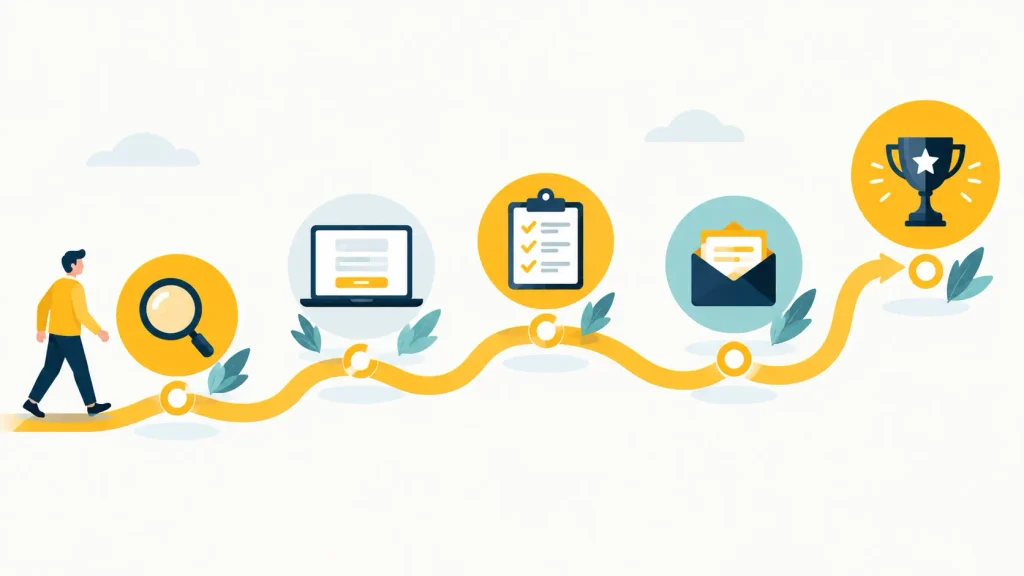
There is no single formula, but most working systems follow this order.
- Define your ideal customer. Describe who buys, what they do, where they are, and what they can pay. A vague audience produces vague leads.
- Identify the problem or buying intent. Someone searching “emergency plumber near me” is ready today. Someone reading about water heater types may be months away. Treat them differently.
- Choose channels that fit. Pick based on where your buyers look for answers, not on what is fashionable.
- Create a clear offer. Give people a reason to respond: a quote, a consultation, a guide, a demo, a checklist.
- Send them to a matching page. The page should repeat the promise that got the click, then make the next step obvious.
- Capture information with a sensible form. Ask for what you truly need to follow up, nothing more.
- Qualify the lead. Use a few meaningful questions or signals to separate serious enquiries from casual ones.
- Follow up and nurture. Reply quickly. If the person is not ready, stay useful with relevant emails or resources.
- Measure what happens afterward. Track which leads became customers, not just which form got submitted.
- Adjust from evidence. Change the offer, page, or channel based on real results.
Adapt this to your business. A roofing company may skip nurturing and call within the hour. A software company with a long sales cycle may spend months on steps 8 and 9. Do not copy someone else’s funnel without asking whether your buyers behave the same way.
How to Generate Leads Online
Each method below works, and each has a catch. None guarantees leads or sales.
SEO and content
Search brings people who are already looking. A clear service page or a helpful article can capture that interest without paying per click. It suits businesses whose customers research before buying.
The catch is time. Rankings do not appear overnight, and traffic alone is not leads. Matching content to search intent matters, which is where on page SEO best practices help. A search engine can only send visitors to pages it can crawl and load, so technical SEO improvements matter too. Educational articles, guides, and landing page copy are the raw material, and professional content writing is where many teams get stuck, because it takes consistency. Off site signals such as relevant mentions and links also affect visibility, and off page SEO strategies cover that side. They support discovery, but they do not directly produce leads.
Landing pages and website conversion
A landing page has one job: get the right visitor to take one action. It suits any channel that sends traffic, paid or organic.
The catch is mismatch. If your ad promises a free audit and the page opens with a company history, people leave. A site that loads quickly, reads clearly on a phone, and makes contacting you simple is what professional web development is meant to deliver.
Google Ads
Search ads put your offer in front of people typing a specific need. They suit businesses with clear services and enough margin to pay for clicks.
The catch is that you pay whether or not the lead is good. Send ad clicks to a dedicated page with a focused offer rather than your homepage, and tell the platform which leads became customers so it can improve targeting. Google’s lead form asset lets people submit details inside the ad, and it requires a privacy policy link, per its help page.
LinkedIn and B2B lead generation strategies
LinkedIn lets you reach people by job title, industry, and company size. It suits B2B companies selling to defined roles, such as finance managers or operations directors. Typical B2B lead generation strategies pair useful posts or ads with a downloadable resource or a demo request.
The catch is cost and sales cycle. Business buyers rarely decide fast, so a lead today may close months from now. Judge results by qualified conversations, not by form fills alone.
Meta and Facebook lead generation campaigns
Meta platforms are strong for reaching consumers and local audiences by interest and location. They suit offers that are easy to understand quickly, like a class trial, a home service quote, or an event signup.
The catch is intent. People scrolling a feed did not ask to hear from you, so submissions tend to be lighter. Short forms can inflate volume with weak leads. Follow up fast and consider adding a qualifying question.
Local search
For businesses serving a town or region, appearing when people search nearby matters more than national reach. A complete business profile, accurate listings, reviews, and service pages for each location bring in high intent enquiries. If that describes you, local SEO services are built around this. The catch is competition from other nearby businesses and the ongoing effort of keeping listings and reviews current.
Email and outreach
Email works for nurturing people who already opted in and for carefully targeted outreach. It suits businesses with a longer buying process.
The catch is legal and reputational risk. In the United States, the FTC says the CAN SPAM Act applies to commercial email with no exception for business-to-business messages, and it requires an opt out mechanism and honoring opt outs within 10 business days. Details are in the FTC’s CAN SPAM compliance guide.
Inbound vs Outbound Lead Generation

Inbound means people find you: they search, read, and then contact you. Outbound means you reach out first through cold email, calls, direct mail, or ads aimed at people who have not shown interest.
Inbound is slower to start but builds assets that keep working, like pages and guides. The audience arrives with intent, so conversations tend to be warmer. Outbound is faster to launch and gives you control over who you contact, but it takes constant effort and often meets resistance, because people did not ask to hear from you.
They are not rivals. A sensible split depends on your situation:
A new local service business usually gains more from inbound, starting with a good service page and local listings, because buyers search for exactly that. A B2B company selling to a small, known group of target accounts may get quicker traction from outbound while its content library grows. A business with an established site and a small team can pair them: content brings in inbound enquiries, while outreach targets a short list of ideal accounts.
Lead Generation Examples
These are hypothetical examples to show how the pieces connect. They are not client results, and no figures are implied.
A local service business. A heating repair company builds a page for each service it offers and completes its Google business listing. Someone searches for a furnace repair near them, opens the page, and uses a short form asking for their address and the problem. The company calls back the same day. The form tells them whether the job is in their area before anyone spends time.
A B2B company on LinkedIn. An accounting software firm posts practical tips for finance managers and offers a month end checklist. Readers download it by sharing a work email and role. Those who match the firm’s target company size get a short email series and an invitation to a demo.
A business using Google Ads. A commercial cleaning company bids on searches for office cleaning in its service area. Clicks go to a dedicated page that lists what is included and asks for office size and cleaning frequency. The extra questions reduce casual submissions but raise the share of serious enquiries.
Content and email nurture. A landscaping company publishes a seasonal planning guide. People who download it receive three useful emails over a few weeks and an invitation to book a consultation.
Lead Magnet Ideas That Attract Real Prospects
A lead magnet is something useful you give in exchange for contact details. It works when it solves a small, specific problem for the exact person you want.
Good options include checklists, templates, short guides, price calculators, site or process audits, recorded webinars, and consultations. A generic ebook rarely attracts serious buyers. A cost estimator for your service often does, because only people considering a purchase will use it.
Match the form to the offer. Asking for a name and email for a checklist is fair. Asking for phone number, budget, and company size for the same checklist feels excessive and will cost you submissions. A consultation request can justify more questions, because the visitor expects a real conversation.
State what happens after they submit. If people expect a download and get a sales call, trust drops and so does lead quality.
Lead Generation Tools and Software
Many terms get lumped together, so separate the roles.
Lead capture tools create the forms, pop ups, chat widgets, and landing pages that collect information. A CRM stores contacts, tracks conversations, and shows where each lead stands. HubSpot and Salesforce are two widely used platforms that combine CRM features with marketing tools and offer integrations with many other tools. Email outreach software and cold email tools send and track messages at scale, and they carry the most legal risk. Lead generation software is a loose label covering any of these, and some products add lead databases or scoring.
When choosing, ask a few practical questions:
- Does it fit how your team already works?
- Can it pass lead details into your CRM without manual copying?
- Does it handle duplicates and keep data clean?
- Does reporting show where each lead came from and whether it became a customer?
- Does it support consent records and easy unsubscribes?
- Is the cost and effort reasonable for your size?
Define the process before buying anything. A small business with a good form, a shared inbox, and a simple spreadsheet may do better than one drowning in a platform nobody has time to configure. Check current features and pricing on vendor sites before deciding, since both change.
Lead Generation Agencies, Companies, and Pay Per Lead
An outside partner can help when you lack time, skills, or a working channel. Before hiring a lead generation agency or any of the lead generation companies that sell services, ask what exactly they do. Some run ads, some build content, some do outreach, and some sell contact lists.
Questions worth asking:
- How do you define a qualified lead, and who decides?
- Where does the contact data come from, and was consent given?
- Will leads be exclusive to me, or sold to several buyers?
- How are invalid, duplicate, or unreachable leads handled?
- What reports will I see, and can I trace leads to outcomes?
- What happens if lead quality is poor?
Pay per lead (PPL) marketing means you pay a set amount for each lead delivered. It moves some risk to the provider, but only as far as the lead definition goes. If a lead means any form fill, you can pay for plenty that never converts. The cheapest lead is not automatically the best one, and cost per lead says little until you know how many become customers.
Buying contact lists carries extra risk. If the people never agreed to hear from you, your emails may break the law or platform rules, and your sender reputation can suffer. Expect honest agencies to talk about limits and uncertainty. Be wary of anyone guaranteeing leads or sales.
How to Measure Lead Generation
Track a few numbers, and keep their definitions fixed so comparisons stay fair.
Number of leads shows activity, but nothing about value. Qualification rate, the share of leads that meet your criteria, shows quality. Landing page conversion rate shows how well a page turns visitors into leads. Cost per lead is spend divided by leads, and cost per qualified lead is the same spend divided by qualified leads only, which is usually the more honest figure. Lead to customer rate shows how many leads end up buying. Customer acquisition cost includes all the spend needed to win a customer, so it is wider than cost per lead.
No single metric tells the whole story. A low cost per lead can hide a poor close rate. A high cost per lead can be fine if those leads become high value customers. I am not offering benchmark values, because they vary by industry, offer, and market. Your own history is the best comparison.
The step many teams skip is connecting lead data to sales outcomes. Without that, you are judging channels by form fills.
Common Lead Generation Mistakes
Targeting the wrong audience. If leads keep turning out unsuitable, revisit who the ads and content speak to.
Chasing quantity. Reward the team for qualified leads or customers, not raw submissions.
An unclear offer. If people cannot tell what they get, they will not respond, or will respond with the wrong expectations.
Mismatched landing pages. Match the page headline to the ad or link that brought the visitor.
Overlong forms. Remove fields you do not use. Add questions only where they improve qualification.
Slow follow up. Reply promptly. A lead left waiting is likely contacting your competitor.
No qualification. Without criteria, sales spends time on people who were never a fit.
Poor data sources. Unverified or improperly collected contacts create legal and deliverability problems.
Ignoring what happens after capture. Track outcomes to find which channels bring customers.
Buying tools before defining the process. Map your steps first, then pick software that supports them.
FAQs
What do you mean by lead generation?
Lead generation is how a business attracts people who show potential interest in its products or services, then captures their contact details and judges how serious they are. That can happen through search, ads, content, social media, or outreach. The goal is a set of qualified prospects the business can follow up with, not just a long contact list.
Is lead generation illegal?
No. Lead generation is a normal business activity, but the methods matter. Legality depends on how contact details are collected, whether consent is needed, and which privacy and marketing laws apply where you operate. For email in the United States, the FTC enforces the CAN SPAM Act, which covers business to business messages too. Phone, text, and data protection rules differ, so check with a qualified legal adviser.
What is an example of lead generation?
A person searches Google for a local accountant, lands on a service page, and requests a consultation by sharing their name, email, and phone number. The business has attracted a prospect who showed interest and has a way to contact them. That is lead generation, and it becomes a qualified lead if the person fits the firm’s criteria. This is a hypothetical example.
Does lead generation make money?
It can, but it is not automatic. For most businesses, lead generation produces revenue only when leads are relevant and convert into paying customers. Profit depends on lead quality, acquisition costs, close rates, pricing, and running expenses. Some companies also earn money by selling leads to other businesses under agreed terms. Nothing here guarantees income.
What is the 3 3 3 rule in sales?
There is no single official 3 3 3 rule. The phrase is used in different ways. One common version is a follow up routine of three touches, such as calls, emails, and social messages, over a short period, though sources disagree on the timing. Another, attributed to consultant Shawn Casemore, means three goals, three focus areas, and three metrics. Always check which version someone means.
What is the biggest mistake in lead generation?
Putting the number of leads ahead of their relevance and quality is a major one, because it fills the pipeline with people who will not buy. That wastes sales time and makes results look better than they are. Other bottlenecks matter too, depending on the business: a weak offer, wrong targeting, or slow follow up. Find which of these is holding you back before changing everything.
Where to Start
If you do one thing this week, write a one paragraph definition of a qualified lead for your business, then check your last twenty enquiries against it. The result will tell you more about your lead generation than any dashboard.
If you want help with the website and search side of this, such as service pages, content, or technical fixes, you can contact Softage Solutions to talk through your requirements.