
This page tracks seo industry news as of October 4, 2026. It covers the Google September 2026 spam update, new content guidance Google published on October 1, the rise of AI Overviews on brand searches, and new Search Console reports. For each item, it says what happened, what is confirmed, what is only reported, and what a business can check on its own site.
Search news ages fast. Dates matter more than headlines, so every item below carries one. If you read this page weeks from now, check the Google Search Status Dashboard first, because the rollout details may have changed.
Key Takeaways
- Google started its September 2026 spam update on September 24. It applies worldwide in all languages, and Google’s dashboard still listed it as active on October 3.
- On October 1, Google updated two Search Central pages. One defines main content, names effort, originality, talent or skill, and accuracy, and warns against fake author profiles. The other says AI-generated material should be checked by a person before publishing.
- DemandSphere reports that AI Overviews on its tracked branded queries went from about 26% in early September to over 80% by the end of the month. Google has not confirmed or explained this, and the effect on clicks is unknown.
- Search Console’s generative AI reports are now available to all sites worldwide, and multimodal search reporting arrived in September.
- Google’s dashboard lists seven ranking incidents for 2026. Many ranking swings seen in third-party tools never had a named update.
- The safest first step is to wait until a rollout ends, then compare your own Search Console data by page and by query before changing anything.
Latest SEO Industry News
Google Updates Its Content Guidance (October 1, 2026)
What happened: Google added text to its “Creating helpful, reliable, people first content” page on Search Central, and the page shows a last updated date of October 1, 2026. The new text defines main content, which is the part of a page that exists to serve the visitor’s purpose. It lists four attributes raters look at: effort, originality, talent or skill, and accuracy. It also adds a warning. Google’s guidance now says fabricated creator profiles, such as AI-generated headshots or made-up credentials, are a form of deception.
The same day, Google changed its generative AI content advice. Three sentences were added to the accuracy section explaining that language models can produce errors, and stating that a human check is important before AI-assisted material goes live, including page titles and image descriptions.
Source: Google Search Central documentation, as reported by Search Engine Journal and PPC Land.
Confirmed: The wording is on Google’s own pages. Google’s quality rater guidelines already treated fake creator profiles as deception, so this brings similar language into guidance written for site owners.
Not confirmed: Google did not say that anything changed in how rankings work. Some commentators have asked whether the edits connect to the September spam update. Google has not said so.
Who may be affected: Sites with author bylines, sites that publish AI-assisted articles, and sites that publish content at scale.
What to check: Read your author pages. Every name, photo, and credential should be real and provable. Then review how AI is used in your drafting process, and make sure a person checks facts, titles, and image descriptions before publishing. If you need help with this, a professional content writing service built around real subject knowledge is one way to keep that standard.
Google September 2026 Spam Update (Started September 24, 2026)
What happened: Google’s Search Status Dashboard lists the September 2026 spam update as starting on September 24 at 09:15 PDT. It applies globally and to all languages, and Google says it may take up to two weeks. Earlier 2026 spam updates finished quickly: March took 19 hours 30 minutes, June took 2 days 1 hour, and August took 2 days 16 hours. This one is the longest announced window of the year.
Source: Google Search Status Dashboard, with coverage from Search Engine Journal.
Confirmed: The start time, global scope, and the possible two-week window. Google has not said whether it targets a specific spam policy or tactic. Reports describe it as a normal spam update with no new spam policies attached.
Reported but not confirmed: Search Engine Roundtable’s reporting says the update does not target link spam. Other writers say it targets AI content. Google has not made that claim. Treat any statement about what it “really” targets as an opinion until Google says more.
The SAFE paper: Search Engine Journal reported on a Google research paper about a system called SAFE, built to detect AI-generated spam, and said it may be part of the update. That connection is a suggestion. The paper describes investigating networks of synthetic video channels, and the authors do not confirm that it operates in Google Search. Read it as background on how Google thinks about scaled AI spam, not as a description of this update.
Who may be affected: Sites that publish large amounts of thin or repetitive pages, sites that use manipulative tactics, and sites with sections that exist only to rank.
What to check: Wait for the dashboard to show the rollout as complete. Then compare performance before and after, page by page. If you find pages that break Google’s spam policies, fix the cause. Google says improvement can take months, because its automated systems need time to see that a site now follows the policies.
AI Overviews Reach More Branded Searches (Late September 2026)
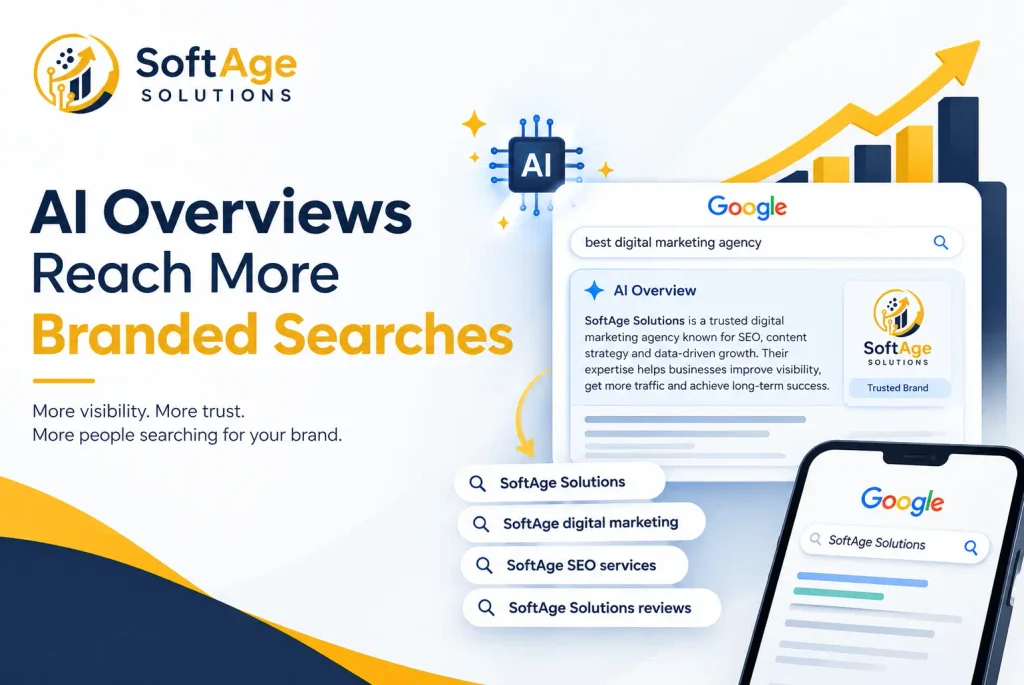
What happened: DemandSphere’s daily tracking of branded keywords shows AI Overviews present on about 26 to 27 percent of them in early September, then above 80 percent from September 28. Search Engine Land reported the data on October 1, along with separate testing that found AI summaries on 93 of 100 brands.
Source: DemandSphere data, reported by Search Engine Land.
Confirmed: Only that DemandSphere recorded these numbers for the queries it tracks.
Not confirmed: Google has not announced a change that explains the jump, and no one has published a click-through rate for branded queries with an AI Overview. The data measures presence, not prominence, and a sharp jump like this could be a test that Google scales back.
Who may be affected: Any business whose customers search for the brand name before buying or calling.
What to check: In Search Console, filter for branded queries and compare click-through rate before and after September 26. Search your own brand name and read what the AI Overview says. Check that it is accurate, and see which sources it uses.
Search Console Adds AI and Multimodal Reporting
What happened: Google added a note to its Search Central blog post saying generative AI performance reports have rolled out to all websites worldwide as of August 31, 2026. The reports show where pages appear in AI Overviews, AI Mode, and generative AI features in Discover, but they do not show how many clicks those appearances create. In September, Google announced multimodal search reporting, which covers searches that start with an image, such as Lens, Circle to Search on Android, image uploads, and Chrome’s right-click “Search this image.”
Source: Google Search Central Blog.
Why it matters: For the first time, many site owners can see AI feature impressions in Google’s own tool instead of guessing from third-party data.
What to check: Open the new reports, note your starting numbers, and record the date. Image-heavy businesses should also look at the multimodal view.
SEO News: Why Following Search Updates Matters for Your Business
Good seo news saves you from two opposite errors. One is ignoring a real change until your traffic drops. The other is rebuilding a website because of a rumor.
Search engines change how they rank pages, what they show on the results page, and how they treat spam. They also change what data site owners can see. A business that follows these changes can tell the difference between a site problem and an industry-wide shift. It can also spot new reports, such as the AI reports now in Search Console, that make its own analysis better.
User behavior matters just as much. People now see AI summaries above results, search with photos, and ask longer questions. A page can hold its ranking and still receive fewer clicks. You only see that if you watch impressions, clicks, and conversions together.
Not every report deserves action. Rank trackers spike when Google tests small changes. Social media posts turn guesses into “facts” within hours. A sensible routine is simple: read official sources first, check your own data second, and treat everything else as a lead to verify.
Major Google Algorithm and Search Updates
Google’s Search Status Dashboard lists these ranking incidents for 2026.
| Start date | Update | Rollout time |
|---|---|---|
| February 5 | February 2026 Discover update | 21 days 17 hours |
| March 24 | March 2026 spam update | 19 hours 30 minutes |
| March 27 | March 2026 core update | 12 days 4 hours |
| May 21 | May 2026 core update | 11 days 21 hours |
| June 24 | June 2026 spam update | 2 days 1 hour |
| August 18 | August 2026 spam update | 2 days 16 hours |
| September 24 | September 2026 spam update | In progress as of October 3 |
For comparison, the December 2025 core update began on December 11 and took 18 days and 2 hours.
Core updates. A core update is a broad change to how Google’s systems assess content. Google released the May 2026 core update on May 21 and listed the rollout as complete on June 2. Google advises against reactive content changes based on short-term swings. Wait until the update has finished, then analyze.
Spam updates. These improve Google’s automated spam detection. They enforce existing spam policies. They are not a general quality review.
Policy and documentation changes. Two are worth knowing. In April 2026, Google’s Search Central blog announced a new spam policy for “back button hijacking.” The name describes pages that interfere with the back button, but read Google’s post before judging your own site. Then on August 28, Google said it was adjusting enforcement of its site reputation policy in the European Economic Area after discussion with the European Commission. Reports confirm this does not mean sites in the EEA cannot receive the manual action. It means the effect on EEA results differs. The policy itself remains.
Volatility without a named update. The dashboard showed no confirmed ranking incident from August 1 to 6, 2026, while third-party trackers spiked. That shows why one tool’s chart is not proof of an update. Google also tests small changes all the time, and those never get a name.
Never assume a named update caused your drop. Check dates, check which pages and queries moved, and rule out your own changes, tracking errors, seasonality, and technical problems first.
What Recent SEO Changes Mean for Website Owners
- Content quality: Google’s October 1 text puts effort, originality, talent or skill, and accuracy in plain words. Pages made quickly with no real knowledge behind them carry the most risk. Strong on-page SEO starts with pages that answer the visitor’s question clearly and accurately.
- Search intent: A page should answer the question behind the query. Many ranking problems are intent mismatches, not penalties.
- Technical SEO: Crawlability and indexing still decide whether a page can appear at all. Check these before blaming an update.
- Site structure and internal links: Clear paths help visitors and crawlers find your most useful pages. Site structure is often set during web development, so it is worth reviewing when a site is rebuilt.
- Page experience and mobile usability: Slow or awkward pages lose visitors even when they rank.
- Image SEO: Google now reports image-started searches in Search Console. Descriptive file names, alt text, and image quality matter more as people search with cameras.
- Structured data: Mark up only what visitors can see on the page. My research found no confirmed 2026 ranking change tied to markup.
- Local SEO: Keep business names, hours, and categories accurate. My research found no verified Google local ranking change in this period. If your customers search by area, review your local SEO service setup and your business profile details.
- Brand visibility: If AI Overviews really are showing more on brand searches, what AI says about your brand matters. Third-party pages like Wikipedia and YouTube can shape that summary. Off-page SEO work, such as earning honest mentions on trusted sites, supports how your brand appears beyond your own pages.
- AI search visibility: Use the new Search Console reports to measure it. Do not assume any report guarantees mentions or citations.
- Traffic and conversions: Fewer clicks do not always mean fewer customers. Watch leads, calls, and sales next to clicks.
How Businesses Should Respond to SEO Industry Changes
Review Organic Search Performance
Open Google Search Console and compare equal periods before and after the change. Look at clicks, impressions, average position, and click-through rate. Split branded and non-branded queries, since AI Overviews may affect them differently. Then open your analytics and check conversions from organic traffic. A traffic drop with steady conversions is a different problem from a drop in both.
Check Important Pages
List your top pages by clicks and by conversions. For each one, ask:
- Did traffic or visibility change?
- Does the page still match what searchers want?
- Is every fact, price, date, and name still accurate?
- Is there outdated information?
- Are there technical errors such as redirects, blocked resources, or wrong canonical tags?
Review Content Quality
Find pages that are thin, repetitive, outdated, or incomplete. Find pages that do not answer the question in the title. Ask whether a real person with real knowledge wrote or checked each page. Improve or merge weak pages with a clear reason. Do not delete content just because a tool called it “low quality.”
Check Technical SEO
Review crawlability, indexing status, canonical tags, internal links, mobile usability, page speed, and structured data. The Search Console indexing and page experience reports are the first place to look. A full technical SEO review goes deeper, but even a basic check will catch errors that block visitors or crawlers.
Avoid Sudden Reactions
One ranking drop, a social media thread, an unconfirmed report, or a short traffic dip should not trigger a major redesign. During a rollout, results move around. Anything you change mid-rollout is hard to judge. Note the dates, wait for the update to finish, and make changes only when your own data points to a cause.
SEO Trends to Watch
Confirmed by official sources:
- Google gives site owners more AI reporting, with generative AI reports now available worldwide in Search Console.
- Google is tightening its written guidance on author honesty and human review of AI content.
- Google ran four spam updates in the first nine months of 2026.
- Search is no longer only text. Google now reports image-started searches.
Industry observations (data from third parties, not confirmed by Google):
- DemandSphere’s data suggests AI Overviews are showing more on branded searches.
- Search Engine Roundtable’s September report describes Google blending AI Mode into AI Overviews.
- Microsoft added an AI Performance report to Bing Webmaster Tools in public preview in February 2026, according to SEO publications. It reports citations, not clicks.
Predictions (my own view, not facts):
- Expect more first-party reporting on AI features across search engines.
- Expect brand accuracy in AI answers to become a normal part of reputation work.
- Expect continued focus on spam and scaled content, since Google keeps writing about it.
None of these predictions is certain. Treat them as things to watch.

SEO Industry News and AI Search
AI Overviews, AI Mode, Microsoft Copilot, and chat-based tools are not the same system. They use different sources, show citations differently, and change often. What works in one may not apply to another.
On Google, AI Overview and AI Mode impressions now appear in a dedicated Search Console report, though the report does not show clicks. On Bing, the AI Performance report shows citations in Copilot and Bing’s AI answers, but, as SEO publishers have noted, a citation is not the same as a visit.
Be careful with promises. No one can guarantee that an AI system will cite or mention your brand. Reports from tracking companies show presence, not proof of influence, and the numbers can move without notice.
Traditional SEO is not dead. Google’s Search Central still publishes the SEO Starter Guide and a separate page for generative AI search. Crawlable pages, useful content, clear structure, and trustworthy information help in both. The change is that you now measure more than rankings. Impressions, citations, brand mentions, and conversions all tell part of the story.
How to Keep Up With SEO News
Build a short, steady routine instead of reading everything.
- Google Search Status Dashboard: The official record of confirmed ranking updates and their start and end times.
- Google Search Central blog and documentation: Where Google announces policy changes and new tools. Check the documentation updates page too.
- Search engine documentation: Read Bing Webmaster resources for Microsoft changes.
- Reliable SEO publications: Search Engine Land, Search Engine Journal, and Search Engine Roundtable report quickly and usually link to the source.
- Official announcements: Company blogs and statements from search and AI platforms.
- Your own Search Console data: Your site is the best evidence you have.
- Website analytics: Confirm whether changes affect visits that matter.
To sort what you read, use four labels:
| Label | What it means | Example |
|---|---|---|
| Confirmed | Stated by the search engine on an official page | Start date of the spam update |
| Observed | Seen in data by a third party | AI Overviews on branded queries |
| Rumor | Passed around with no clear source | Claims about what the update “really” targets |
| Opinion | A view or prediction | “SEO will change completely next year” |
Ask one question of every report: where did this come from, and can I check it myself?
Common Mistakes When Responding to SEO Updates
- Changing the site after one ranking drop. One day of data is not a diagnosis.
- Treating rumors as facts. Wait for an official source or your own evidence.
- Blaming every traffic change on an update. Seasonality, tracking errors, and site changes are common causes.
- Copying competitors. Their situation, content, and goals differ from yours.
- Removing useful content without analysis. Some pages that look weak still bring in leads.
- Publishing large amounts of low-quality content. This is the pattern spam updates exist to catch.
- Ignoring search intent. Ranking for a query is pointless if the page does not answer it.
- Ignoring technical issues. Indexing and crawl errors can look like algorithm problems.
- Focusing only on rankings. Rankings do not pay bills.
- Ignoring conversions. Compare traffic to calls, forms, and sales.
- Chasing every trend. Test ideas that fit your business, not every headline.
- Assuming AI search works exactly like traditional search. Each platform has its own rules.
What SEO Professionals Should Monitor Next
Nothing here is a prediction. These are items worth watching.
- The end of the September spam update. Check the dashboard for the completion note, then wait before analyzing.
- Follow up on Google’s October 1 guidance. Watch whether Google adds clarity or announces related changes.
- Branded click-through rate. Compare before and after September 26 in Search Console. If Google rolled back a test, the pattern may change again.
- Search Console AI reports. Build a baseline now. Without one, later numbers mean little.
- EEA and non-EEA differences. Sites using third-party content sections should track results by region.
- Bing’s AI Performance report. Microsoft has said it will keep improving it, so the data may become more useful.
- The next core update. Google has not announced a date. When it does, the dashboard will be the first place to see it.
Conclusion
The big current items in seo industry news are the September 2026 spam update, Google’s October 1 guidance on main content, fake authors, and AI content review, the reported rise of AI Overviews on brand searches, and new Search Console reports. Each one points to the same habit: use official sources for facts, and your own data for decisions.
Reliable seo industry news helps because it keeps you from reacting to noise. Official pages tell you what Google has actually said. Your Search Console and analytics tell you what happened on your site. The two together are better than any rumor.
The basics are still the same. Useful content, healthy technical SEO, and a clear match to search intent matter in classic results and in AI answers. No agency or tool can promise rankings, traffic, leads, recovery, or AI citations. A sound process is to watch carefully, check your data, and make changes only for good reasons.
If you want help reading your own search data or reviewing your pages, SoftAge Solutions can work through it with you.
FAQs
What is SEO industry news?
It is news about search engines, ranking updates, search features, and the tools and rules that affect how websites appear in search. It includes official Google announcements and reports from respected SEO publications.
What is the latest SEO news?
As of October 4, 2026, the main items are the September 2026 spam update that began on September 24, Google’s October 1 changes to its content guidance, the rise of AI Overviews on branded searches reported by DemandSphere, and new Search Console AI and multimodal reports.
How often does Google update its search algorithm?
Google changes search many times a year, but only some changes get a name. Its Status Dashboard lists seven ranking incidents for 2026 as of October 3, including core, spam, and Discover updates. Smaller changes happen without announcement.
Where can I get reliable SEO news?
Start with Google Search Central, the Google Search Status Dashboard, and Bing Webmaster resources. For reporting and context, Search Engine Land, Search Engine Journal, and Search Engine Roundtable are widely read.
How do Google algorithm updates affect rankings?
Updates can move some pages up and others down. The effect varies by site, topic, and page. A site can see no change at all. Do not assume every drop comes from an update.
Should I change my website after a Google update?
Not right away. Wait until the rollout ends, then compare your own data. Make changes only if you find a clear problem, such as a weak page, a technical error, or a policy violation.
What SEO trends should businesses watch?
Watch AI features in search, Search Console’s new AI reports, Google’s stricter wording on honest authorship and AI content review, image-based search, and the quality of your own content.
Is SEO still important with AI search?
Yes. Google still publishes SEO guidance, and AI features draw on pages that are crawlable and useful. You now need to measure more than rankings, but no one can guarantee AI citations or mentions.
How can I check if my website was affected by a Google update?
Compare Search Console clicks and impressions for equal periods before and after the rollout. Check which pages and queries changed. Rule out technical errors, tracking changes, and seasonality before blaming the update.
What is the best source for Google Search updates?
The Google Search Status Dashboard for confirmed ranking updates, and the Google Search Central blog and documentation for policy and feature changes.
What did Google confirm about the September 2026 spam update?
Google confirmed the start time, that it applies worldwide in all languages, and that it may take up to two weeks. It has not said which spam policy or tactic it targets.
Are AI Overviews now showing for brand searches?
DemandSphere reports they appeared on over 80% of its tracked branded queries by late September. Google has not confirmed a change, and the effect on clicks is not known.